How Extreme Heat Impacts Roofing in Missouri: What St. Louis Homeowners Need to Know

How Extreme Heat Impacts Roofing in Missouri: What St. Louis Homeowners Need to Know
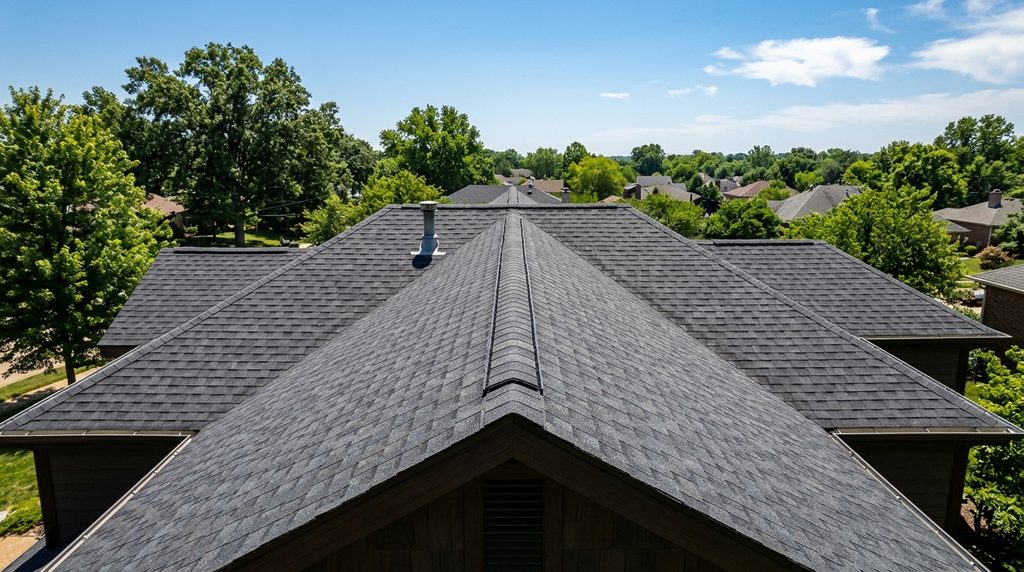
When homeowners across St. Louis think about severe weather damaging their roofs, hail storms, spring tornados, and winter ice dams usually steal the spotlight. However, there is a silent, relentless force damaging residential and commercial roofs across Eastern Missouri every single summer: extreme heat and intense ultraviolet (UV) radiation.
Summers in Missouri are notorious. Between July humidity and August heatwaves, ambient air temperatures in St. Louis routinely climb past 95 degrees Fahrenheit to 100 degrees Fahrenheit. What many property owners do not realize is that the temperature on top of a standard asphalt shingle roof can skyrocket up to 150 degrees Fahrenheit or even 170 degrees Fahrenheit during peak afternoon sun.
At Wildwood Roofing & Construction, we have spent decades inspecting, repairing, and replacing roofs throughout St. Louis County, St. Charles, Jefferson, and Franklin Counties. Over two decades of local experience, we have witnessed firsthand how high thermal stress degrades roofing materials, destroys underlayment, spikes energy bills, and causes structural failures long before a shingle’s advertised lifespan.
This guide breaks down the science of heat damage on Missouri roofs, highlights the warning signs to watch for, explains how to protect your home, and outlines why immediate action is critical to prevent costly disaster.
Quick Summary: How Heat Destroys Missouri Roofs
For a quick reference on how high temperatures compromise your roofing system, review the core mechanisms below:
| Heat Impact Factor | Thermal Effect on Roofing | Structural & Financial Result |
| Thermal Expansion & Contraction | Materials swell under daytime heat and shrink during cool nights. | Pulls fasteners loose, cracks shingles, creates micro-gaps for water leaks. |
| Volatile Organic Compound (VOC) Loss | Extreme UV rays dry out petroleum-based asphalt binding oil. | Shingles become brittle, curl, crack, and lose protective granules. |
| Attic Heat Trap | Poor ventilation bakes the roof deck from below (150 degrees Fahrenheit plus temperatures). | Warps plywood/OSB sheathing, voids manufacturer warranties, spikes AC bills. |
| Thermal Shock | Sudden temperature drop during severe summer thunderstorms. | Causes rapid contraction, leading to structural micro-fractures in flashings and seals. |
1. The Physics of Extreme Heat on Your Roof
To understand why extreme heat is so destructive, you have to look at what happens at a microscopic and structural level when sunlight hits your home.
A. The 160 Degrees Fahrenheit Surface Cooking Effect
Dark asphalt shingles are exceptional thermal absorbers. On a 90 degrees Fahrenheit day with clear skies, ambient air is warm, but dark roofing materials absorb radiant solar energy continuously. By mid-afternoon, your roof surface is literally hot enough to fry an egg or cause second-degree burns on skin.
This extreme surface temperature bakes the petroleum compounds that hold asphalt shingles together. Over time, heat drives out the essential oils that give shingles their flexibility, leaving them dry, rigid, and fragile.
B. Thermal Shock and Rapid Contraction
Missouri weather is notoriously unpredictable. A typical summer afternoon might see blazing sun and 98 degrees Fahrenheit temperatures, followed within minutes by a sudden thunderstorm that dumps rain cooled to 65 degrees Fahrenheit.
This rapid shift drops roof surface temperatures by 60 degrees Fahrenheit to 80 degrees Fahrenheit in a matter of minutes. This phenomenon—known as thermal shock—causes roofing components to contract violently. Shingles, metal flashings, rubber pipe boots, and wood decking shrink at different rates. Over time, this differential movement ruptures seal strips, breaks caulk bonds, and pops nails loose.
2. The Direct Consequences of Summer Heat on Roofing Materials
Different roofing components react to heat exposure in specific, destructive ways:
Asphalt Shingle Deterioration
- Granule Loss: Protective granules reflect sunlight and protect the asphalt layer from direct UV degradation. As heat bakes out the binding oils, granules loosen and wash into your gutters. Bald spots expose raw asphalt to direct UV rays, dramatically accelerating rot.
- Cupping and Curling: When the underside of a shingle heats up faster than the top (or vice versa), differential expansion causes the edges to turn upward (cupping) or the middle to bow up (curling). Curved shingles are easily snapped off by even mild summer wind gusts.
- Blistering: Trapped moisture or volatile gases inside low-quality or aging asphalt shingles expand when heated. This expansion pops through the top surface, creating small craters or blisters that ruin the shingle’s waterproofing capability.
Underlayment and Decking Failure
- Melting Underlayment: Low-grade felt paper underlayment can dry out, tear, or even stick to the underside of shingles, destroying the secondary water barrier.
- Decking Delamination and Sagging: When heat builds up in the attic, plywood or OSB (Oriented Strand Board) roof sheathing warms up. Over multiple seasons, high humidity combined with extreme heat weakens wood adhesives, leading to warped, sagging, or delaminated decking that feels spongy underfoot.
Flashing and Sealant Breakdown
- Failed Pipe Boots and Collars: The neoprene or rubber boots that seal around vent pipes, chimneys, and roof valleys are highly susceptible to UV degradation. Summer heat causes rubber seals to dry, crack, and split, creating direct pathways for summer downpours to enter your attic.
- Cracked Caulking and Mortar: Extreme heat bakes roof caulking and sealant around flashing until it hardens, shrinks, and pulls away from brick or siding.
3. The Hidden Catalyst: Inadequate Attic Ventilation
Heat doesn’t just attack your roof from the outside; it bakes it from the inside out.
                                 [ SOLAR RADIATION ]
                                          │
                                          ▼
         ┌─────────────────────────────────────────────────────────────────┐
         │ Roof Shingles Surface Temp: 150 to 170 degrees Fahrenheit       │
         └─────────────────────────────────────────────────────────────────┘
                                          │
                                          ▼
         ┌─────────────────────────────────────────────────────────────────┐
         │                  Plywood/OSB Roof Decking                       │
         └─────────────────────────────────────────────────────────────────┘
                                          ▲
                                          │
         ┌─────────────────────────────────────────────────────────────────┐
         │Trapped Attic Air Heat (Poor Ventilation): 150 degrees Fahrenheit│
         └─────────────────────────────────────────────────────────────────┘
When an attic lacks sufficient ridge vents, soffit vents, or attic fans, hot air accumulates with nowhere to escape. Heat radiates downward through your ceiling insulation into your living space, forcing your air conditioner to run constantly and driving up electric bills.
More critically, this trapped heat turns your attic into a giant oven. When asphalt shingles are cooked from above by the Missouri sun and cooked from below by 150 degrees Fahrenheit attic air, they degrade at double the normal rate. In fact, most standard roofing manufacturers will completely void their material warranty if the attic beneath the roof is not ventilated to precise building code standards.
4. How to Spot Heat-Damaged Roofing: A Homeowner Checklist
If your roof has endured multiple St. Louis summers, perform a quick ground-level inspection or check your attic for these telltale signs:
- [ ] Curled, Cupped, or Buckled Shingle Edges: Look at the roof edges and sunny slopes. Are the shingles laying flat, or are the corners turning up?
- [ ] Excessive Granules in Gutters: Clean out your gutters. If you see piles of dark, sand-like granules, your shingles are losing their UV shield.
- [ ] Skyrocketing Summer Utility Bills: If your AC energy usage has climbed drastically compared to previous years without a rate change, poor attic ventilation and thermal transfer may be the culprit.
- [ ] Spongy or Wavy Roof Lines: Looking up at your roof ridge or slopes, do you notice saggy spots or uneven lines? This indicates heat-damaged, warped decking.
- [ ] Cracked or Hardened Flashing Sealants: Inspect around skylights, dormers, and chimneys for cracked sealant.
- [ ] Blisters or Dark Spots on Shingles: Dark blotches indicate areas where granules have completely worn off, exposing raw asphalt.
5. How Wildwood Roofing Builds Heat-Resistant Roof Systems
At Wildwood Roofing & Construction, we do not just slap on new shingles—we engineer complete, high-performance roofing systems designed specifically to withstand the harsh Midwestern climate.
Premium Architectural Shingles
We utilize advanced architectural shingles featuring enhanced UV-reflecting granule technology and high-grade petroleum binders. These materials resist thermal degradation, maintain elasticity longer, and carry superior wind and impact ratings.
Balanced Attic Ventilation Systems
Our team calculates the exact Net Free Ventilating Area (NFVA) required for your home’s square footage. By installing balanced soffit intake vents and continuous ridge exhaust vents, we ensure a constant airflow that keeps attic temperatures within safe limits, lowering your cooling costs and preserving your roof deck.
Synthetic Underlayment & High-Temp Ice & Water Shields
We upgrade homes from old-fashioned felt paper to advanced synthetic underlayment. Synthetic underlayment does not absorb moisture, tear under high heat, or degrade over time. In vulnerable areas like valleys, eaves, and flashing penetrations, we install self-adhering high-temperature ice and water shields that seal around nail shanks and withstand extreme heat spikes.
6. Take Action: Protect Your St. Louis Home Today
Ignoring heat damage on your roof leads to leaks, rotten roof decks, mold growth, and premature total roof replacement. Don’t wait for a summer downpour to reveal a major leak.
At Wildwood Roofing & Construction, we make protecting your home seamless, transparent, and hassle-free:
- Free, No-Obligation Same-Day Quotes: Get a clear, accurate, and up-front cost breakdown without the high-pressure sales pitch.
- Comprehensive Roof Inspections: Our local experts evaluate shingle integrity, flashing conditions, attic ventilation efficiency, and storm damage.
- Decades of Local Expertise: Proudly serving St. Louis, Wildwood, Chesterfield, Ballwin, Ellisville, Kirkwood, St. Charles, and surrounding Missouri communities with 5-star quality.
Ready to Heat-Proof Your Roof?
Contact the local experts at Wildwood Roofing & Construction today to secure your property before the next summer heatwave or severe storm hits!
- Schedule Your Roof Inspection: Call us directly or submit an inquiry to reserve your free inspection.
- Get Your Free Same-Day Quote: Speak with our local roofing specialists today to get a fast, accurate estimate tailored to your home.
Contact Wildwood Roofing & Construction Today — Your Trusted St. Louis Roofing Specialists.
Popular Posts