St Louis Storm Damage Roof Repair Checklist: What Homeowners Should Do Immediately After Hail

St Louis Storm Damage Roof Repair Checklist: What Homeowners Should Do Immediately After Hail
St. Louis storm damage roof repair starts with a prompt, professional inspection and the right repair plan after hail or high winds. Homeowners across Wildwood, St. Louis County, St. Charles County, Franklin County, Jefferson County, and nearby Missouri and Illinois communities know severe weather can arrive with little warning, bringing powerful thunderstorms, damaging wind gusts, golf-ball-sized hail, and tornado-producing systems that can compromise roofing systems fast.
Recent storms in the region have produced hail ranging from quarter-size to golf-ball-size and wind speeds reaching 60-70 mph—conditions capable of damaging shingles, flashing, gutters, siding, skylights, and roof structures. That damage is not always obvious from the ground, and hidden issues can worsen over time if they are not documented and repaired quickly, leading to leaks, larger repair bills, insurance complications, and lost property value.
At Wildwood Roofing & Construction, we help Greater St. Louis homeowners identify storm damage, document it for insurance claims, and complete expert roof repairs that restore their homes quickly and professionally. This checklist walks you through what to do after a storm, including safety steps, how to spot visible and hidden roof damage, emergency mitigation, damage by roofing material, what to review in your insurance policy, when to file a claim, and when repair may no longer be enough and a roof replacement should be considered.
If your property has recently experienced hail, follow this comprehensive storm damage roof checklist to protect your investment and avoid costly repairs.
Why Hail Damage Should Never Be Ignored
Many homeowners assume that if there are no immediate leaks, their roof is fine. Unfortunately, hail damage isn’t always obvious from the ground.
Hail can:
- Fracture asphalt shingles
- Loosen protective granules
- Damage roof vents and flashing
- Crack skylights
- Dent gutters and downspouts
- Create weak spots that lead to future leaks
In many cases, a roof can appear relatively normal while sustaining damage significant enough to reduce its lifespan by years.
The longer storm damage remains untreated, the greater the likelihood of:
- Interior water damage
- Mold growth
- Decking deterioration
- Increased repair costs
- Insurance claim complications
That’s why acting quickly after a hailstorm is critical.
Step 1: Prioritize Safety First
Before inspecting your property, ensure the storm has completely passed and it is safe to go outside.
Avoid These Common Mistakes
Do not:
- Climb onto the roof
- Inspect wet roofing surfaces
- Walk near downed power lines
- Enter areas with structural instability
Even experienced homeowners can be seriously injured attempting rooftop inspections.
Instead, conduct an initial inspection from a safe location on the ground and contact a professional roofing contractor for a complete evaluation.
Step 2: Check for Visible Exterior Damage
Once it’s safe to go outside, inspect your home’s exterior.
Look for signs such as:
Damaged Gutters
Hail often leaves:
- Dents
- Dings
- Impact marks
- Misaligned gutter sections
Because gutters are made of soft metal, they frequently provide one of the most obvious indicators of hail activity.
Damaged Siding
Inspect all sides of the home for:
- Cracks
- Chips
- Dents
- Punctures
- Missing panels
Vinyl, aluminum, and fiber cement siding can all be affected by hail.
Damaged Windows and Screens
Check for:
- Broken screens
- Cracked glass
- Window frame dents
- Damaged trim
Damage around windows may indicate the storm carried enough force to impact roofing materials as well.
Outdoor Equipment Damage
Inspect:
- Air conditioning units
- Patio furniture
- Deck railings
- Fencing
- Mailboxes
If these surfaces show significant impact marks, your roof may have sustained similar damage.
Step 3: Look for Signs of Roof Damage From the Ground
You should never climb onto a roof immediately after a storm.
Instead, observe from a safe location.
Common warning signs include:
Missing Shingles
Strong winds can:
- Lift shingles
- Crease roofing materials
- Tear shingles away entirely
Missing shingles expose underlayment and decking to moisture intrusion.
Dark Spots on the Roof
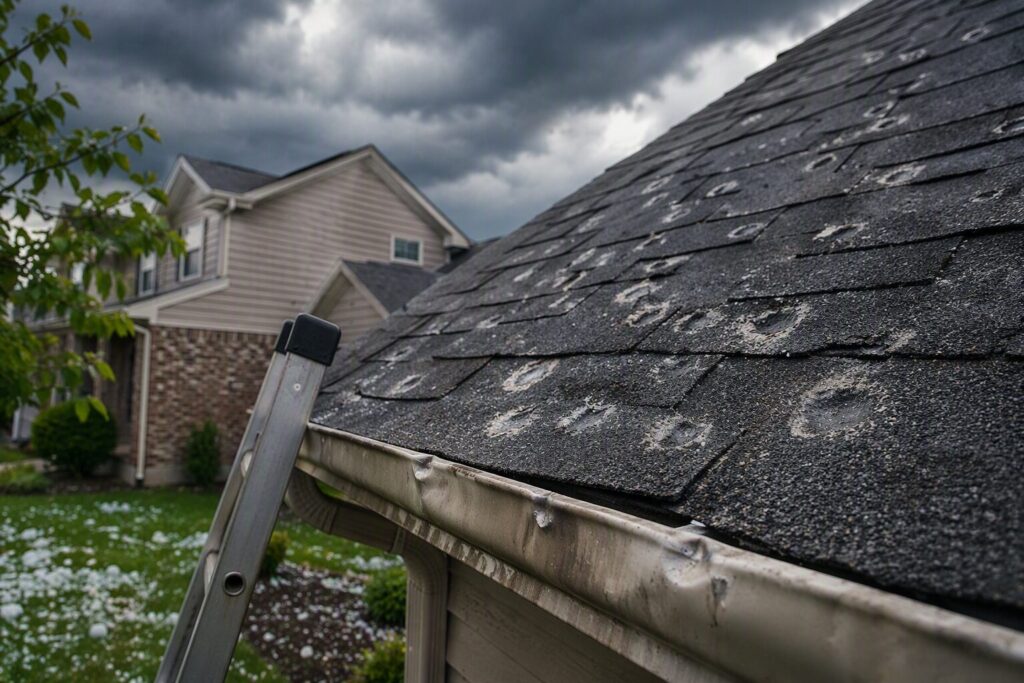
Hail may remove protective granules, leaving:
- Dark patches
- Circular impact marks
- Exposed asphalt
These damaged areas become highly vulnerable to UV deterioration and water penetration.
Debris on the Roof
Look for:
- Fallen branches
- Tree limbs
- Leaves
- Storm debris
Even small branches can damage shingles during high winds.
Bent or Damaged Roof Components
Inspect visible:
- Vents
- Flashing
- Chimney caps
- Exhaust systems
Metal components frequently show hail impacts before shingle damage becomes visible.
Step 4: Inspect Your Attic Immediately
Many homeowners overlook the attic following a storm.
However, the attic often reveals early signs of roof damage.
Check for:
Water Intrusion
Look for:
- Damp insulation
- Water stains
- Dripping water
- Wet wood
Even minor leaks can cause major structural problems over time.
Daylight Penetration
If sunlight is visible through the roof structure, water can likely enter as well.
Mold or Mildew Odors
Excess moisture can quickly lead to:
- Mold growth
- Air quality issues
- Wood decay
Any unusual smell following a storm should be investigated immediately.
Step 5: Document Everything
One of the most important steps after a hailstorm is creating thorough documentation.
Insurance companies often require detailed evidence when processing claims.
Take Photos of:
- Roof damage visible from the ground
- Missing shingles
- Dented gutters
- Damaged siding
- Broken windows
- Interior water damage
- Fallen trees
- Storm debris
Record Important Information
Document:
- Date of the storm
- Estimated storm duration
- Size of hail observed
- Areas affected
The more information you gather, the stronger your claim may be.
Step 6: Prevent Secondary Damage and Roof Repair Needs
If the storm created openings in the roof, temporary protection may be necessary.
Emergency mitigation measures can include:
- Professional roof tarping
- Temporary water diversion
- Debris removal
- Leak containment
The goal is to prevent additional damage until permanent repairs can be completed.
Failing to take reasonable steps to minimize further damage can sometimes create issues during the insurance process.
Step 7: Schedule a Professional Roof Inspection
A professional inspection is one of the most critical steps after hail damage.
Many forms of storm damage are difficult—or impossible—for homeowners to identify from the ground.
Professional Inspectors Evaluate:
- Shingle integrity
- Granule loss
- Soft spots
- Flashing damage
- Vent damage
- Ridge cap damage
- Underlayment condition
- Structural concerns
At Wildwood Roofing & Construction, our experienced team provides detailed storm damage inspections designed to identify both visible and hidden problems before they become larger, more expensive issues.
Step 8: Understand How Hail Damages Different Roofing Materials
Not all roofs respond to hail the same way.
Asphalt Shingles
Most common in St. Louis-area neighborhoods.
Typical damage includes:
- Granule loss
- Bruising
- Cracking
- Punctures
Metal Roofs
More impact-resistant but may experience:
- Cosmetic dents
- Surface deformation
- Flashing damage
Architectural Shingles
Often perform better during hailstorms but may still sustain hidden structural damage.
Tile and Slate Roofs
Can crack or fracture from large hail impacts.
Professional evaluation is important regardless of roof type.
Step 9: Review Your Insurance Policy
Understanding your homeowner’s insurance coverage can help streamline the recovery process.
Review:
- Deductibles
- Wind coverage
- Hail coverage
- Replacement cost provisions
- Actual cash value provisions
If you’re unsure how your policy applies, your roofing contractor can often help provide the documentation needed for insurance review.
Step 10: File Your Insurance Claim Promptly
Most insurance policies have specific timeframes for reporting storm damage.
Waiting too long may:
- Delay repairs
- Complicate claim approval
- Increase out-of-pocket costs
When filing:
- Provide photographs.
- Submit inspection reports.
- Include repair estimates.
- Keep records of all communications.
Organization can help make the process smoother and faster.
Common Signs You May Need a Roof Replacement After Hail
Not every storm-damaged roof requires replacement.
However, replacement may be recommended if there is:
- Extensive shingle damage
- Widespread granule loss
- Multiple leaks
- Significant structural impact
- Damage affecting large roof sections
A professional inspection can determine whether repairs or replacement is the better long-term solution.
Why Local Experience Matters
Storm restoration requires more than roofing knowledge.
It requires understanding local weather patterns, building codes, and regional construction practices.
At Wildwood Roofing & Construction, we proudly serve homeowners throughout the St. Louis metropolitan area, including:
- St. Louis County, MO
- St. Louis City, MO
- St. Charles County, MO
- Franklin County, MO
- Jefferson County, MO
- Lincoln County, MO
- Warren County, MO
- Jersey County, IL
- Madison County, IL
- St. Clair County, IL
- Clinton County, IL
- Monroe County, IL
Our local expertise allows us to respond quickly and provide solutions tailored to the unique weather challenges faced by homes throughout Missouri and Illinois.
Storm Damage Red Flags Homeowners Often Miss
Many homeowners focus only on obvious roof damage.
However, some of the most costly problems begin with subtle warning signs:
Granules in Gutters
Excessive granules indicate shingle deterioration.
Loose Flashing
Damaged flashing can allow water to penetrate around vulnerable roof openings.
Minor Ceiling Stains
Small discoloration sometimes indicates larger hidden moisture issues.
Damaged Vent Boots
Cracked vent seals are a common source of post-storm leaks.
Gutter Separation
Strong winds can pull gutters away from the fascia, affecting drainage and increasing water intrusion risks.
Identifying these issues early often saves thousands in future repair costs.
The Cost of Waiting Too Long
Delaying storm damage repairs can lead to:
- Higher repair costs
- Interior ceiling damage
- Attic moisture issues
- Mold growth
- Insulation damage
- Increased energy bills
- Structural deterioration
A problem that could have been resolved with a simple repair may eventually require a full roof replacement.
Prompt action protects both your home and your finances.
Trust Wildwood Roofing & Construction as Your Roofing Contractor for Storm Damage Restoration
When severe weather strikes, homeowners need a roofing partner they can trust.
Wildwood Roofing & Construction provides:
Storm damage inspections
Roof repair services
Full roof replacement
Insurance claim assistance
Emergency response solutions
Residential roofing services
Commercial roofing services
Siding and exterior restoration
Our team is committed to helping homeowners recover quickly while delivering workmanship that stands the test of time.
Get a Free Roof Inspection and Instant Online Roof Estimate Today
If your home recently experienced hail, strong winds, or severe weather, don’t wait for visible leaks to appear.
Hidden storm damage can worsen over time and lead to expensive repairs.
Contact Wildwood Roofing & Construction today for a professional roof inspection.
Request Your Instant Online Roof Estimate
Our team proudly serves homeowners throughout the Greater St. Louis area, including Missouri and Illinois communities.
Get peace of mind, protect your home, and discover whether your roof has storm damage before small issues become major problems.
Contact Wildwood Roofing & Construction Today
Request a Roof Repair or Replacement Consultation
Get an Instant Online Roof Estimate
Protect your home. Protect your investment. Contact your local roofing professionals today.
Popular Posts